Text
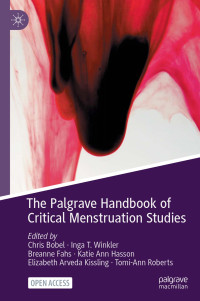
Ebook The Palgrave Handbook of Critical Menstruation Studies
A book project of this scope and scale requires the creativity, grit, tenacity,
and goodwill of legions—more than can be properly acknowledged here. Our
exhaustive outreach depended on many intersecting networks of countless
scholars, advocates, and others who helped connect us with the right person
to write the right piece at the right time. We know that every chapter in this
book is possible because of the labor of many and we regret that we cannot
list each of these behind-the-scenes helpers.
But we will take a moment to explicitly name a few people and organizations
whose support of this project was invaluable.
Sharra Vostral helped conceive the rationale and framework for this
handbook. Her visionary work crafting the proposal for this Handbook set
the project in motion, and now, several years later, we remain in her debt.
Our thanks also go to the anonymous peer reviewers who provided incisive
feedback [and encouragement] at both proposal and clearance review stages.
They, too, helped shape this Handbook.
We leaned heavily on several editors and editorial assistants along the way.
In the early days, Michelle Chouinard managed the communication and
organization of our call for proposals. Trisha Maharaj, Victoria Miller, Laura
Charney, and Sydney Amoakoh provided invaluable support for many chap
ters. During the final and all-important stage of preparing the book for
production, Sydney Amoakoh also single-handedly managed the abstracts,
bios, images, figures and tables, and various consent forms plus more for
more than 130 contributors. Her calm efficiency and capacity to track detail
is a marvel. We also benefited from the hand of Dakota Porter, who stepped
in to help with myriad administrative tasks in the last phase of manuscript
preparation. Many thanks also to Virginia Roaf who provided editorial sup
port and special appreciation to the peerless Perri Schenker whose invaluable
editorial skills were essential to producing this resource. Others who stepped
in at key moments include Adrian Jjuuko, Marcy Darnovsky, the Center for
Genetics and Society, Radu Dondera, Dawn Dow, and Anna Krakus. We
thank them each.
We also note with gratitude the team at Palgrave Macmillan/Springer
Nature, especially Holly Tyler who first pitched the idea of a handbook to
Chris with irresistible enthusiasm, and Joshua Pitt who succeeded her and
walked with us throughout the subsequent years of this project. He and edi
torial assistant Sophie Li responded to every query—the trivial, the profound,
and the anxious–with equanimity and unflagging support for our vision for
this book. “Thank you” is too small a phrase.
Finally, we appreciatively acknowledge those who donated resources to
support the book. First, we thank artist Jen Lewis, self-described ‘menstrual
designer’ whose arresting 2015 macrophotograph “The Crimson Wave”
(2015) graces our cover. Second, we express our gratitude to our gener
ous funders—the Center for the Study of Social Difference at Columbia
University through its Working Group on Menstrual Health and Gender
Justice and the University of Massachusetts Boston Periodic Multi-Year
Review Fund. Without their support, we would not have been able to meet
our ambitious goal of publishing this robust and richly diverse body of work.
And above all, we express our sincerest gratitude to the Water Supply and
Sanitation Collaborative Council whose abiding belief in the value of this
book enabled us to not only engage crucial editorial help, but also covered
the fees necessary to make the digital edition permanently open access world
wide. From the very beginning, our fervent hope for this book was that it
function as a reliable and accessible ‘go to’ resource for the widest possible
audience, and WSSCC’s generosity makes this truly possible.
Ketersediaan
| E00017B | 618 | Tersedia |
Informasi Detail
- Judul Seri
-
-
- No. Panggil
-
618
- Penerbit
- Singapore : Palgrave Macmillan., 2020
- Deskripsi Fisik
-
Ebook
- Bahasa
-
Indonesia
- ISBN/ISSN
-
978--981-15-0613-0
- Klasifikasi
-
618 BOB t
- Tipe Isi
-
-
- Tipe Media
-
-
- Tipe Pembawa
-
-
- Edisi
-
1
- Subjek
- Info Detail Spesifik
-
-
- Pernyataan Tanggungjawab
-
Chris Bobel
Versi lain/terkait
Tidak tersedia versi lain
Lampiran Berkas
Komentar
Anda harus masuk sebelum memberikan komentar
 Karya Umum
 Filsafat
 Agama
 Ilmu-ilmu Sosial
 Bahasa
 Ilmu-ilmu Murni
 Ilmu-ilmu Terapan
 Kesenian, Hiburan, dan Olahraga
 Kesusastraan
 Geografi dan Sejarah